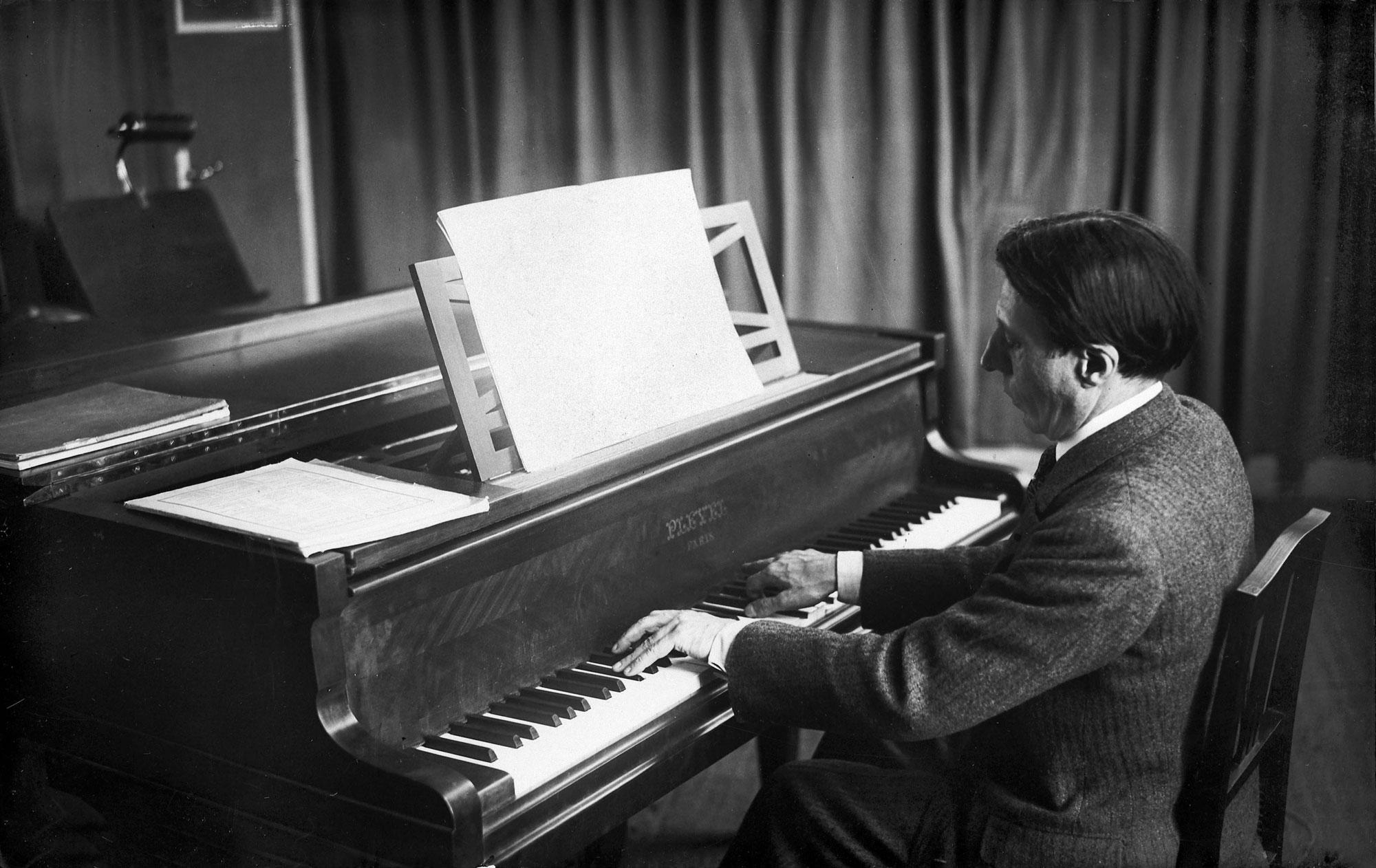
Alfred Cortot's Recordings: A Beginner's Guide
By The Alfred Cortot Archives | Published 2026-07-31Introduction
Alfred Cortot recorded extensively throughout his career, making it difficult for new listeners to know where to start. This guide highlights a selection of Cortot's best recordings, many of which have remained benchmarks for nearly a century, from his celebrated Chopin to his legendary chamber music performances with Jacques Thibaud and Pablo Casals, with embedded listening links provided throughout.
(Explore our discography with 340+ of Alfred Cortot's recordings over at our recordings page.)
Cortot was one of the most prominent pianists of his age, famed for his intensely poetic, expressive playing. That is not to say that Cortot did not have a formidable technique, as many selections below will reveal. Modern listeners accustomed to digitally spliced studio albums should note that Cortot's recordings were made in segments of unedited 4-minute takes, with limited opportunity for retakes. What these early recordings lack in modern studio polish, they more than make up for in spontaneous musical flow, an intense sense of poetry, intelligent interpretations with carefully calculated tempos, colors and dynamics, and, of course, Cortot's inimitable, trademark rubato.
Table of Contents
- Core Repertoire: Chopin & Schumann
- French Masterworks: Debussy, Ravel, and Franck
- Cortot the Virtuoso: Liszt & Saint-Saëns
- Chamber Music With Thibaud & Casals
- Appendix: Lyrical Gems
Core Repertoire: Chopin & Schumann
Cortot is arguably most famous for his Chopin interpretations. While he recorded much of this repertoire multiple times, his Abbey Road sessions from 1933-1939 are a good starting point, featuring a good compromise between a higher recording fidelity than his earlier recordings, and Cortot, now in his late 50's, still having his fingers in good shape.
A fine first entrypoint is the cycle of Chopin's Préludes Op. 28 (1933), showing many sides of Cortot's artistry, both as a poet and a virtuoso; Cortot was among the first pianists who considered the Préludes a cycle, linking them together into an inevitable narrative whole while carefully characterizing each individual piece.
From the 1933 set of the Ballades, the 4th Ballade in F minor Op. 52 is a particular highlight, though the whole set is excellent (rewind the Ballade video embed to hear it) and probably more accessible to new listeners with its slightly more measured approach and higher sound fidelity than the fiery but more idiosyncratic 1929 recording of the set. Likewise, his 1933 account of the B flat minor sonata is preferable to the 1928 account, standing shoulder to shoulder with many of the great readings of the time - Rachmaninoff and Horowitz included. Finally, his 1935 recording of the Piano Concerto No. 2 in F minor with conductor John Barbirolli is well worth hearing, with the second movement in particular being a "desert island" tier recording with its tenderly sculpted lines and atmosphere of dreamy nostalgia.
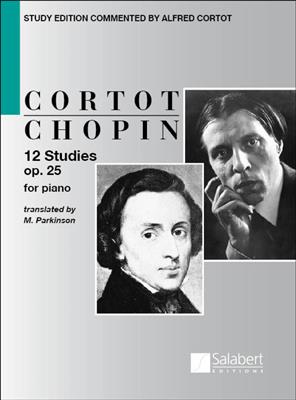
Cortot's Study Editions for Chopin
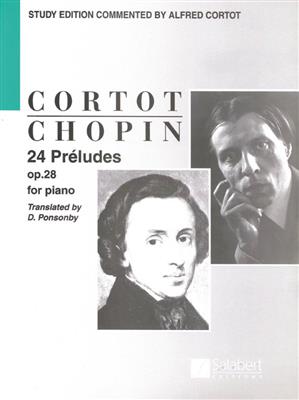
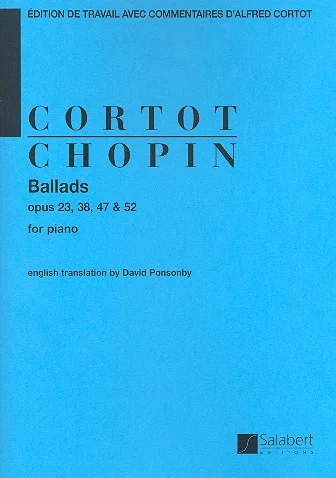
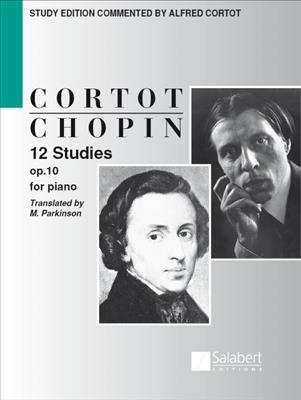
Alongside Chopin, Schumann was a composer close to Cortot's heart and artistic temperament. His 1935 recording of the Kreisleriana captures the work's kaleidoscopic shifts between melancholy, fire, and dreamy lyricism with endless depth of detail, colour and emotion, as does his 1928 account of Carnaval. To round off this selection, an intimate and tender Kinderszenen from 1935 is included, and finally the Schumann Concerto in A minor with the London Symphony Orchestra and conductor John Barbirolli, which Cortot recorded multiple times - the first time in 1923 as an acoustic recording - here in its 1934 account.
French Masterworks: Debussy, Ravel, and Franck
As a student of Émile Decombes (who knew Chopin) and a peer of Fauré, Ravel and Debussy, Cortot was immersed in the social and musical environment in which their compositions were born (Franck died when Cortot was a teen, but the pianist did much to champion his late masterpieces, including the rarely played but wonderful Prélude, Aria et Final). In Cortot's hands, Franck's Prélude, Choral et Fugue emerges with a passion that is as sincere as it is intelligently measured - the chorale unfolding with an inevitable and tragic grandeur, before the fugue builds to a fiery climax where the work's cyclical form comes full circle. Equally masterful is his handling of atmospheric color, captured in his 1930 traversal of the Debussy Préludes, Book I and 1931 account of Ravel's Sonatine.
Cortot the Virtuoso: Liszt & Saint-Saëns
While Cortot is most frequently celebrated for his poetry and lyricism, his recordings from his prime years in the 1920's reveal plenty of "chops". (In fact, though a slight decline is apparent from the 1930's onwards, it was only during his post-war recordings that his failing health brought a noticeable, progressive deterioration of his technique - though that certainly did not stop him from approaching his repertoire with the same energy, courage and commitment, playing recitals with Chopin's 24 Etudes Op. 10 & 25 and 24 Preludes Op. 28 well into his 70's).
His nimble 1926 account of Liszt's Hungarian Rhapsody No. 2 should convince any detractors, as should his 1919 acoustic recording of Saint-Saëns' Étude en forme de valse—a performance that prompted a young Vladimir Horowitz to seek out Cortot for lessons, hoping to learn his secret to double-note technique. (Cortot, considering this a poor motive for study, never divulged it to him). This selection concludes with Liszt's paraphrase on Verdi's Rigoletto, and Cortot's 1929 account of the Sonata in B minor - the first recording of this great work; intelligently structured and played with Faustian conviction.
Chamber Music With Thibaud & Casals
Cortot was also part of a celebrated trio with Jacques Thibaud and Pablo Casals, producing many fine chamber music recordings that are still in demand today, despite their age. Though each player has their own distinct artistic voice, they complement each other well, infusing their performances with a sense of spontaneity and charm.
Included below are two recordings made by the whole trio - a fiery account of Mendelssohn's Piano Trio No. 1 in D minor and an elegant Trio in B flat major by Schubert. Also included are two recordings made by Cortot and Thibaud alone - a 1929 recording of César Franck's Violin Sonata in A Major and Beethoven's Sonata No. 9 in A Major, Op. 47 ("Kreutzer") - all gold standard recordings.
Lyrical Gems & Encores
As a final selection, we include a few lyrical gems and encores that focus on Cortot's poetic sensibilities. These recordings, while perhaps not as widely known as his core repertoire, offer Cortot at his best in an intimate format. Particularly the 1953 Schubert Litanei auf das Fest Aller Seelen in Cortot's own arrangement, though recorded late in his life when his technique was in rapid decline, is heart-achingly beautiful, as is the 1948 Brahms' Lullaby and the Bach Arioso, also in Cortot's own arrangements.
These recordings are only a small sample of Cortot's vast recorded legacy, which includes numerous additional works by the above composers as well as many others. One of the most interesting aspects of exploring Cortot's discography is comparing the multiple recordings he made of the same works across four decades (for example, the Chopin Ballades, Préludes, and Etudes, to mention a few), allowing one to hear how his interpretations evolved over time. It can be fascinating to see what aspects of his interpretations remained nearly identical, and which aspects changed, sometimes dramatically, over the years. In future articles, we hope to cover the many interesting aspects of Cortot's discography in more detail.
If you've enjoyed the performances above, the next step is to explore the complete Alfred Cortot Archives discography, where you'll find over 340 recordings, detailed recording information, historical releases and many more embedded performances.
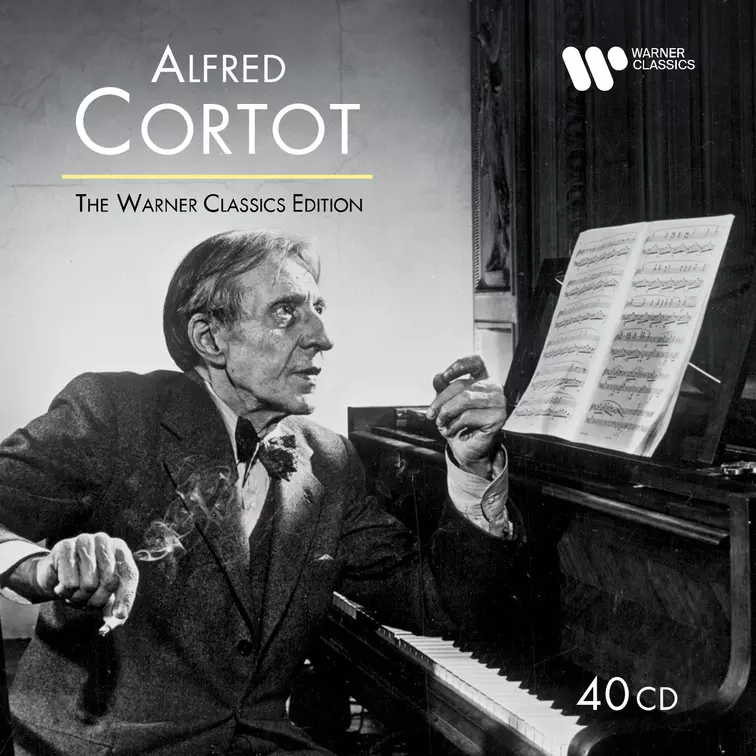
Recommended CD Releases
Support the Alfred Cortot Archives
If this archive has been useful to your research or listening, you can help cover hosting and ongoing maintenance costs by supporting the project.
Support the Archive